
Red Oak Garage Door Guide
What Your Garage Door Is Trying to Tell You
Grinding, popping, or a hard bang on a Red Oak garage door usually points to hardware original to 1980s-2000s builds. Here's what each sound actually tells you.
- Licensed & Insured
- Same-Area Service Calls
- Upfront Pricing
The Problem
Most homeowners ignore garage door noise until the door won't open at all. That's backwards. A door makes distinct sounds before it fails, and in a service area where houses were mostly built between 1981 and 2014 - median year 1991 - the noises tend to fall into a handful of patterns tied to hardware that's now 20 to 40 years old.
A door installed in 1991 has had three decades of temperature swings and daily cycles on its original springs, rollers, and track brackets. Even if nothing's ever "broken," metal fatigues, lubricant dries out, and fasteners back out a quarter turn at a time.
The sound is the early warning. A bang is not.
We get calls where someone describes a noise that's been going on for six months and ask if it's normal. It's rarely normal. It's rarely an emergency either - but ignoring it usually turns a $150 fix into a $600 one.
The fix here isn't mystery diagnostics. It's matching what you hear to what's actually wearing out on a door of this age.
What Local Conditions Do
Red Oak sits in a moderate heat climate band, not the extreme swings you'd get further west or in a harsher desert zone. That matters for noise diagnosis: our doors aren't fighting the same freeze-thaw cracking or the same triple-digit sustained heat that punishes hardware elsewhere. What we do get is steady thermal cycling - warm days, cooler nights, humidity shifts - which is exactly the kind of slow, repeated expansion and contraction that loosens fasteners and dries out lubricant on schedule rather than destroying it suddenly.
That's why the noise pattern here tends to build gradually: a squeak that turns into a squeal over months, not a sudden shriek after one heat event. On a door built in the 1980s or 90s stock common across this area, that steady cycling has had two to four decades to work bolts loose on track brackets and hinges.
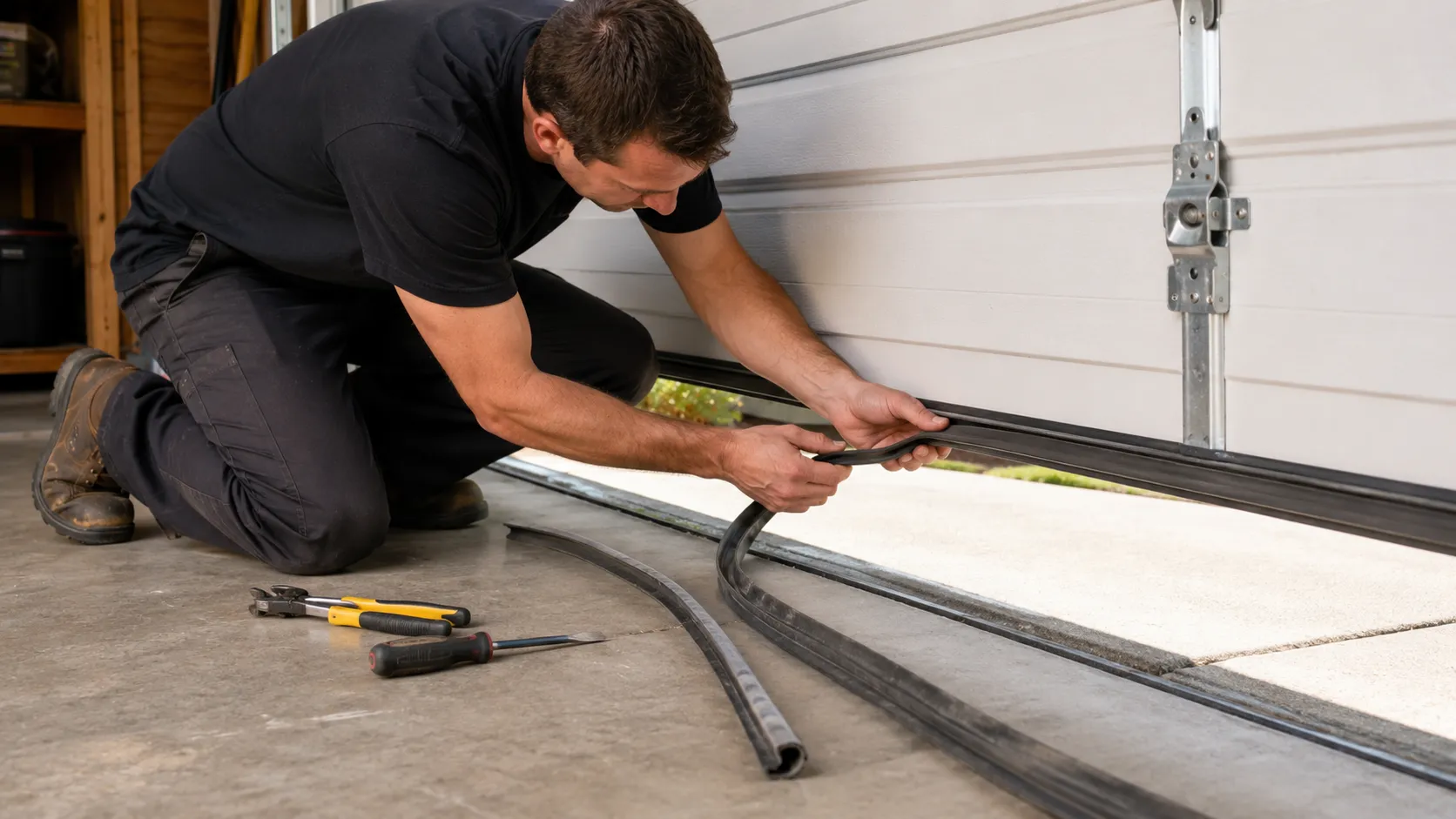
A rattly track or a hinge that's started to squawk on the down-stroke is usually just metal-on-metal from lost lubricant, not a sign the door is failing structurally. The moderate band buys you time to catch it before conditions turn a loose bracket into a dropped panel.
What to Look At First
Start with where the sound happens in the door's travel, not just what it sounds like.
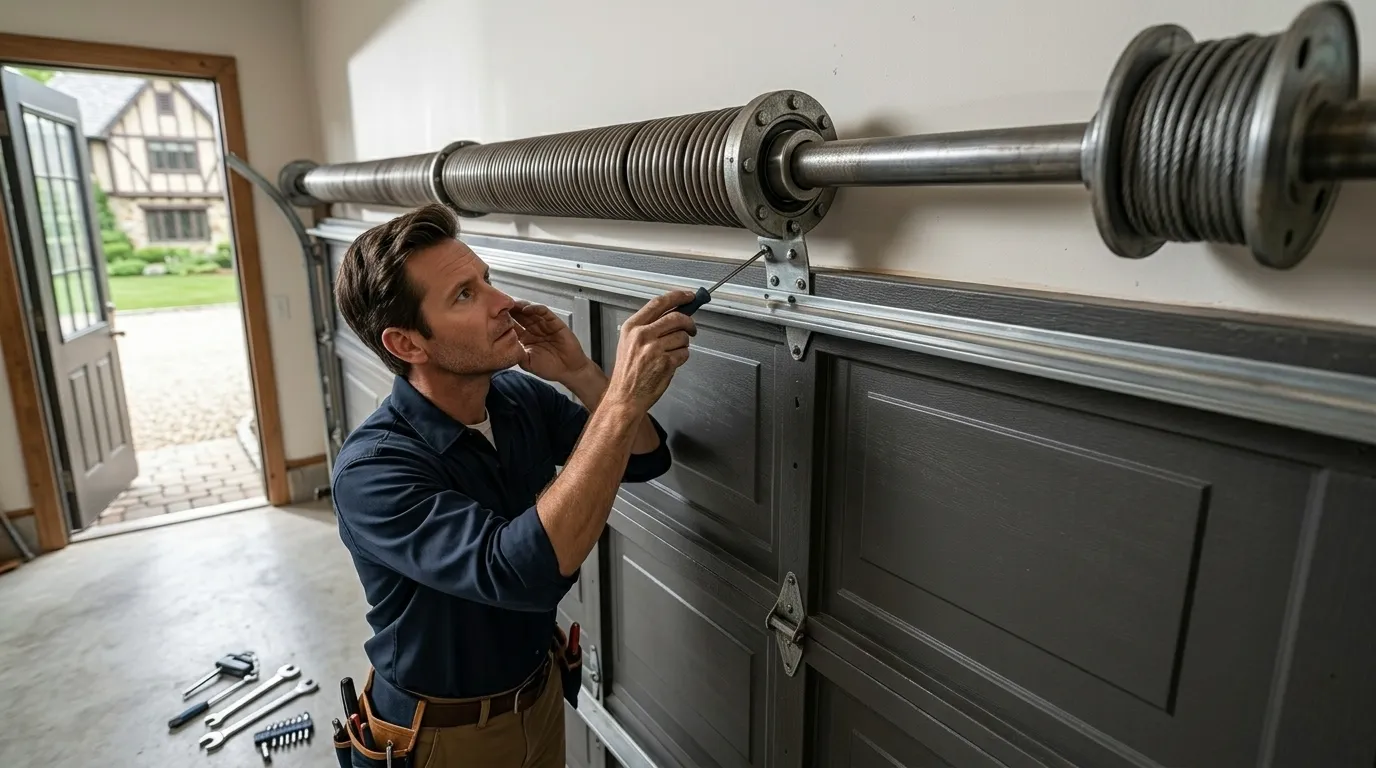
- Grinding at the top of the cycle: usually the opener's drive gear or the top roller binding in a track that's shifted slightly out of alignment - common on the older end of the 1981-2014 stock where brackets have loosened over the years. - A sharp pop, then quiet: often a hinge cracking under stress rather than moving smoothly, especially on doors with hinges original to construction. - Rhythmic squeaking on every panel: dry rollers.
If your house falls into the 1980s-90s stock common across this area, factory rollers from that era are long past their service life. - A loud bang followed by the door refusing to move: stop. That's very often a broken torsion spring, and it's not a lubrication problem - it's a parts and cable-tension job.
We don't recommend homeowners open the spring system themselves. That's the one place where a wrong move causes real injury, and it's also where we tell people honestly: if your door is original to a build from the early part of that 1981-2014 range, replacing the spring set is often smarter than patching just the one that broke.
Season by Season
In a moderate heat band like ours, the noise calendar is less dramatic than in places with hard freezes or extreme summer heat, but it still shifts.
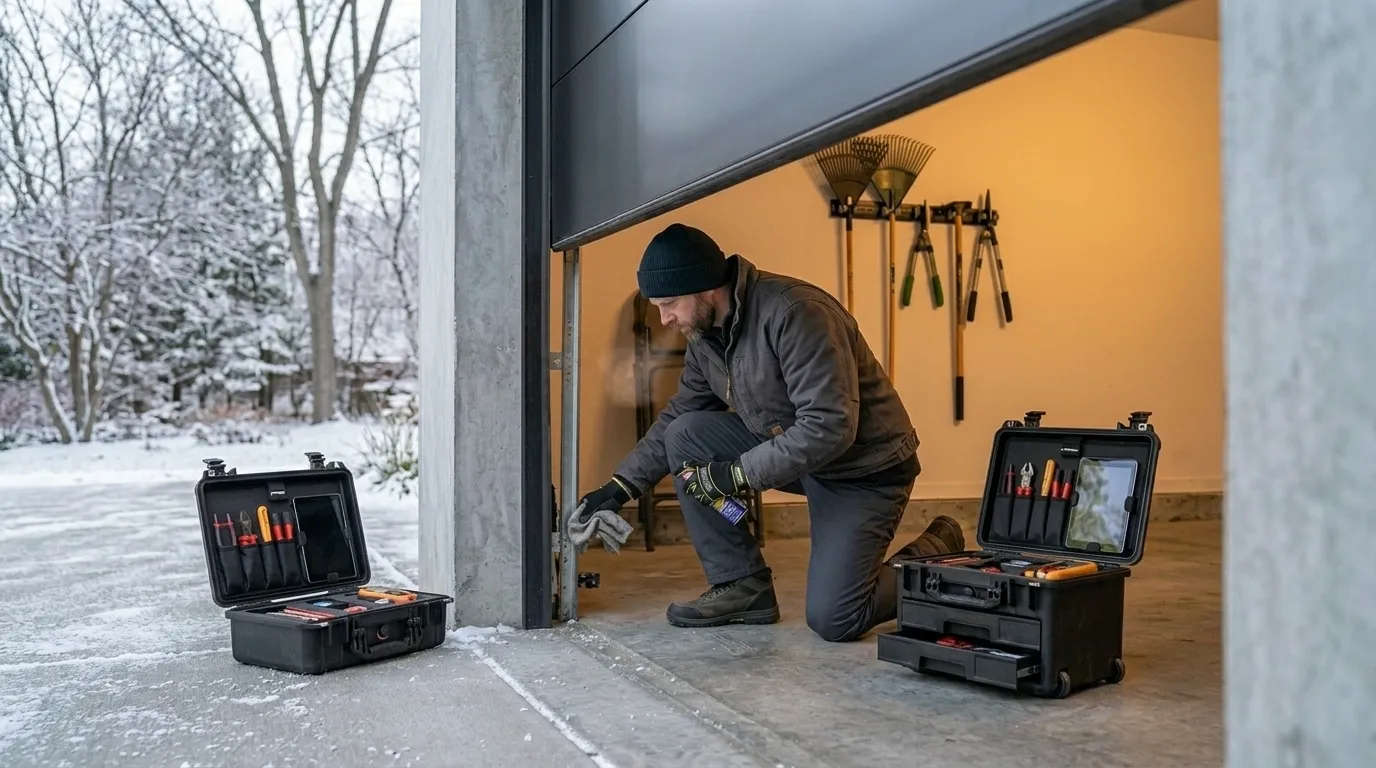
Spring and fall, when day-to-night temperature swings are widest here, are when you'll notice the most new squeaks - metal expanding and contracting daily works grease out of rollers and hinges faster than in the flatter temperature stretch of deep summer. That's a good window to listen closely and get ahead of it with lubrication before a dry hinge turns into a cracked one.
Summer heat, while moderate compared to harsher zones, still causes metal components to expand slightly, which can tighten up an already-misaligned track and turn a quiet rub into an audible scrape. If your house sits in the 1980s-90s stock common across the nine areas we work in, that's often the first summer noise homeowners report.
Winter here doesn't bring the freeze-related snapping you'd get further north, so a sudden new noise in the colder months is less likely to be weather-driven and more likely to be a part that was already near the end of its life finally giving out.
How We Can Help
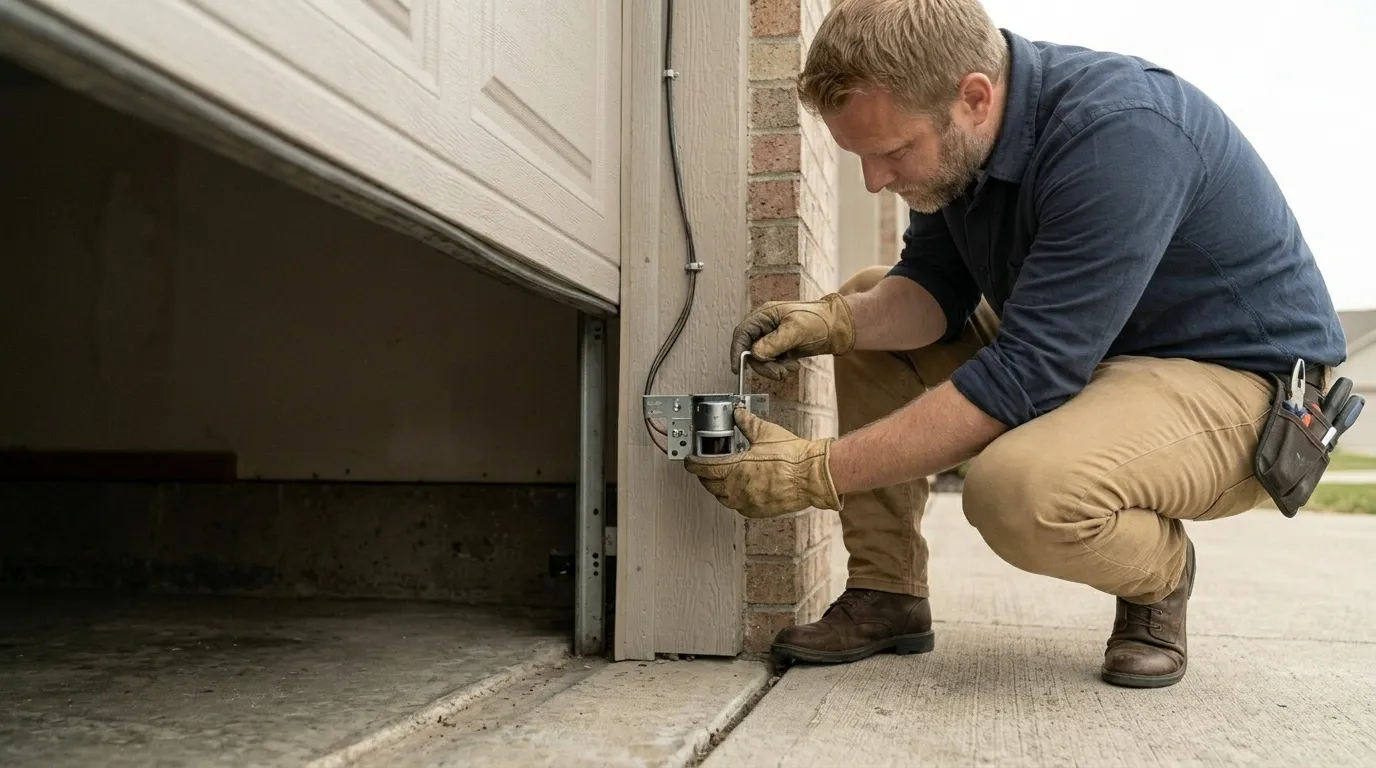
Garage Door Repair
Springs, cables, tracks, rollers, and openers fixed by a tech who explains the problem before touching anything.
Learn more →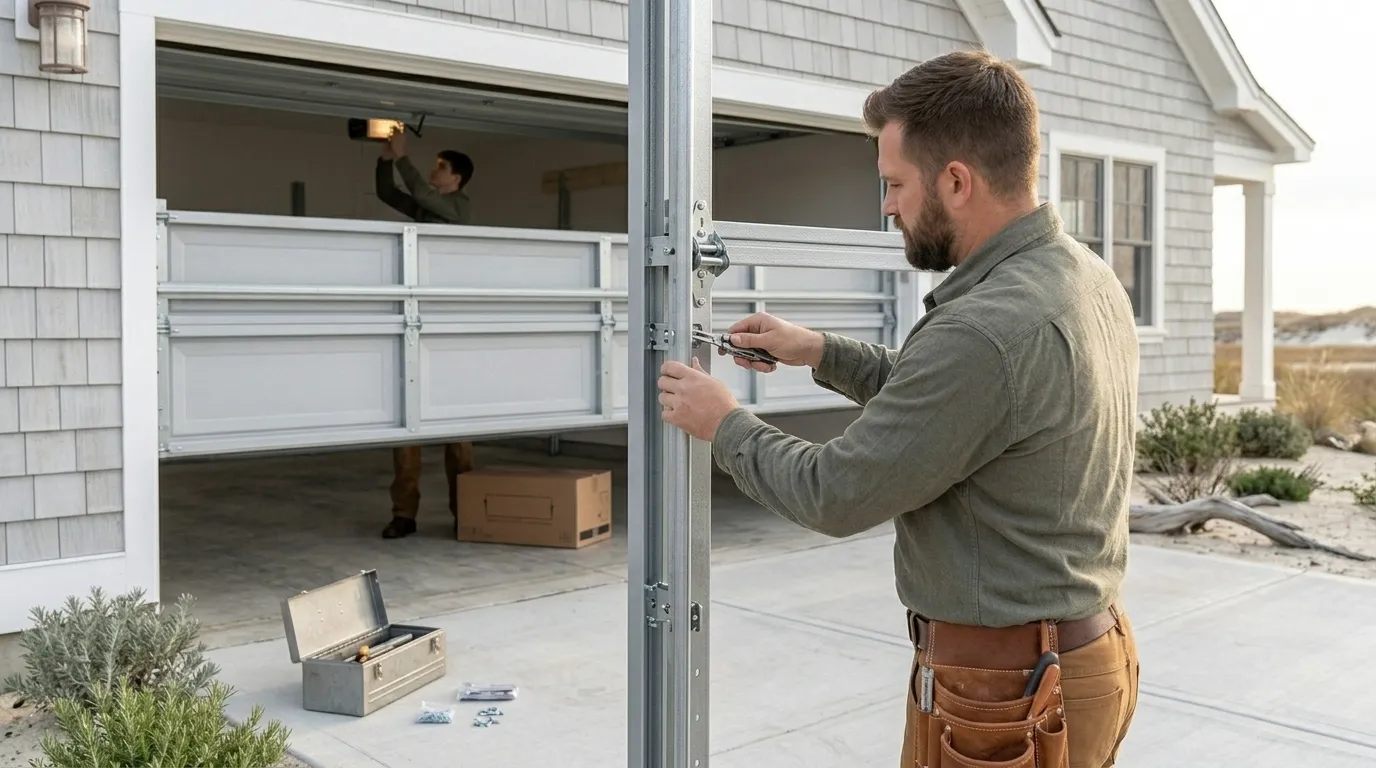
Garage Door Installation
New sectional doors sized and installed for the housing stock actually built in this area.
Learn more →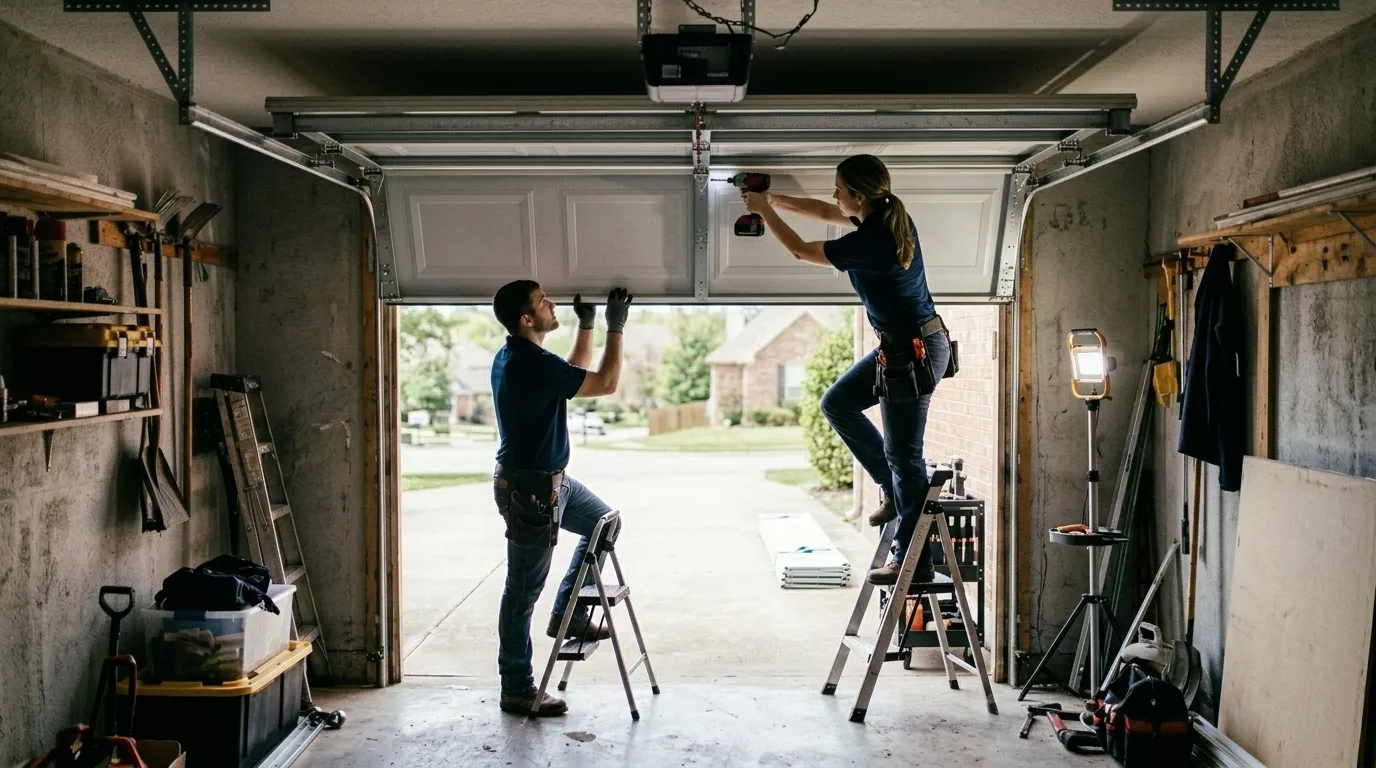
Garage Door Service
Tune-ups, lubrication, and safety checks that catch a small problem before it becomes a service call.
Learn more →Frequently Asked Questions
My garage door makes a loud bang and then won't open. Is that an emergency?
Usually, yes - a loud bang followed by the door refusing to move is the classic sign of a broken torsion spring. Don't try to force the door or disconnect the opener manually. It's a same-day repair in most cases, but it does need a trained hand on the spring system, not a homeowner fix.
Why does my door only squeak in spring and fall?
Wider day-to-night temperature swings in those seasons dry out lubricant on rollers and hinges faster than the steadier stretch of summer. It's one of the more predictable patterns we see given our moderate heat climate band, and it's a good time to grease the hardware before it turns into a harder-to-fix problem.
My house was built in the early 1990s. Does that matter for noise?
It does. A lot of the housing stock here dates to that 1981-2014 window, with a lot of it clustered in the 1980s and 90s. Hardware from that era has had decades of daily cycling, so loose brackets, worn rollers, and fatigued springs are more common than in newer construction.
Can I just oil the noisy part myself?
For rollers and hinges, light lubrication is a reasonable first step and often the right one. What you shouldn't touch is the spring system - that's under real tension and it's where injuries happen. If the noise is a bang or grinding at the opener gear, that's worth a look before you keep running the door.
Have a Door That Needs a Second Opinion?
Call and describe what it is doing - we will tell you what it likely is.