
Service
Garage Door Service in Red Oak, TX
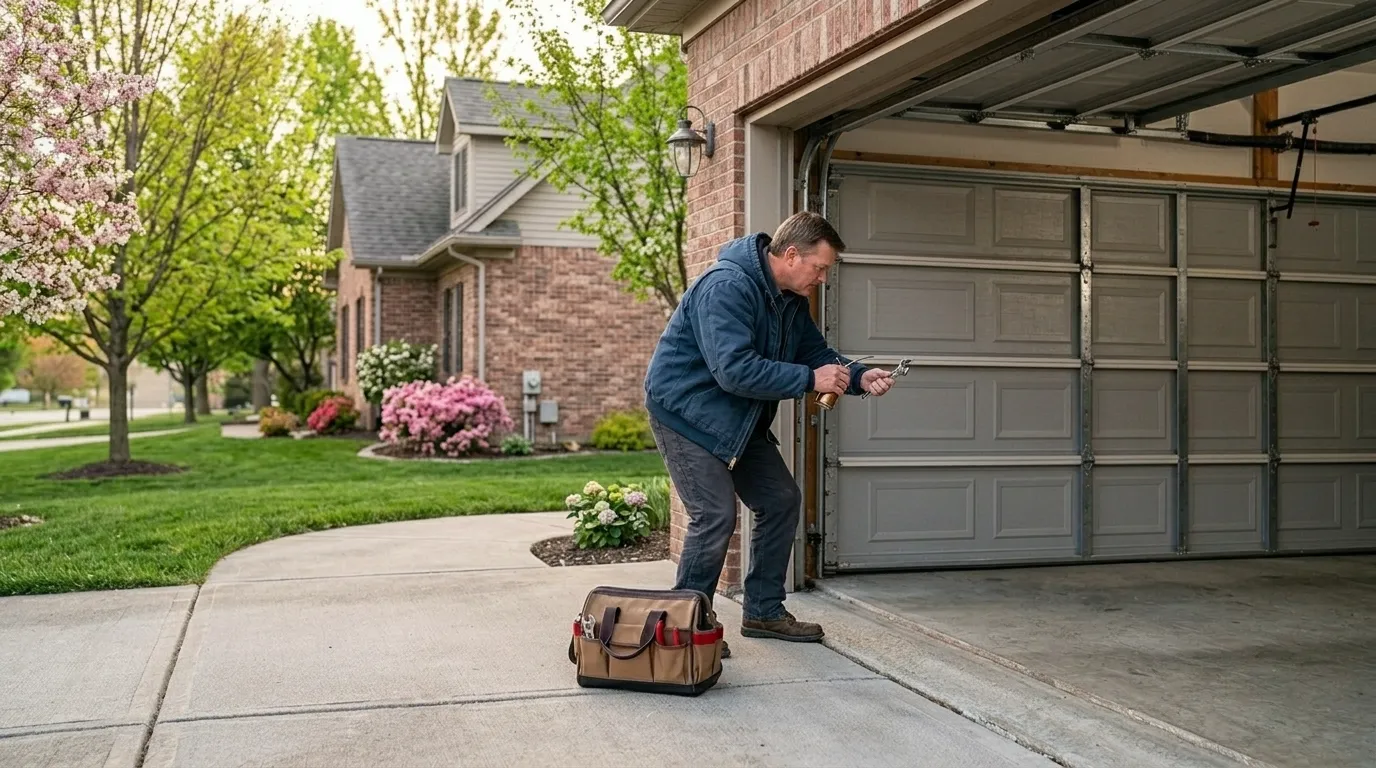
Garage door spring and opener repair for Red Oak, TX homes built 1981-2014. Local service across Red Oak's nine neighborhoods, priced after a real inspection.
- Licensed & Insured
- Same-Area Service Calls
- Upfront Pricing
What Happens When You Call
-
1
Call or Request a Quote
Tell us what the door is doing and roughly how old the house is - that alone points us toward the likely part before a truck leaves.
-
2
On-Site Diagnosis
A tech checks the spring, cables, tracks, and opener in person and tells you plainly what is actually wrong.
-
3
Straight Price, No Surprises
You get a number before any work starts. It covers parts and labor, nothing added after the fact.
-
4
Fixed the Same Visit
Most repairs are done in one trip. If a part needs sourcing, we tell you that upfront instead of guessing.
What You Are Seeing
Most calls start the same way: the door won't open, or it opens partway and stops. Sometimes it's a bang from the garage followed by the door refusing to budge at all - that's usually a torsion spring letting go. Other times the opener runs but the door doesn't move, which points to a stripped gear or a chain that's jumped the sprocket.
You might also notice one side of the door dropping faster than the other on the way down, which means a cable has come off the drum or a roller has worn through its track. None of these are subtle once they show up. A door that used to run quiet and now grinds, hesitates, or reverses on its own before it hits the floor is telling you a part is close to done, not just noisy.
Catching it at the grinding-and-hesitating stage is a lot cheaper than catching it at the spring-snapped stage, because a snapped spring under load can bend the track or crack a panel on its way down.
What Causes It Around Here
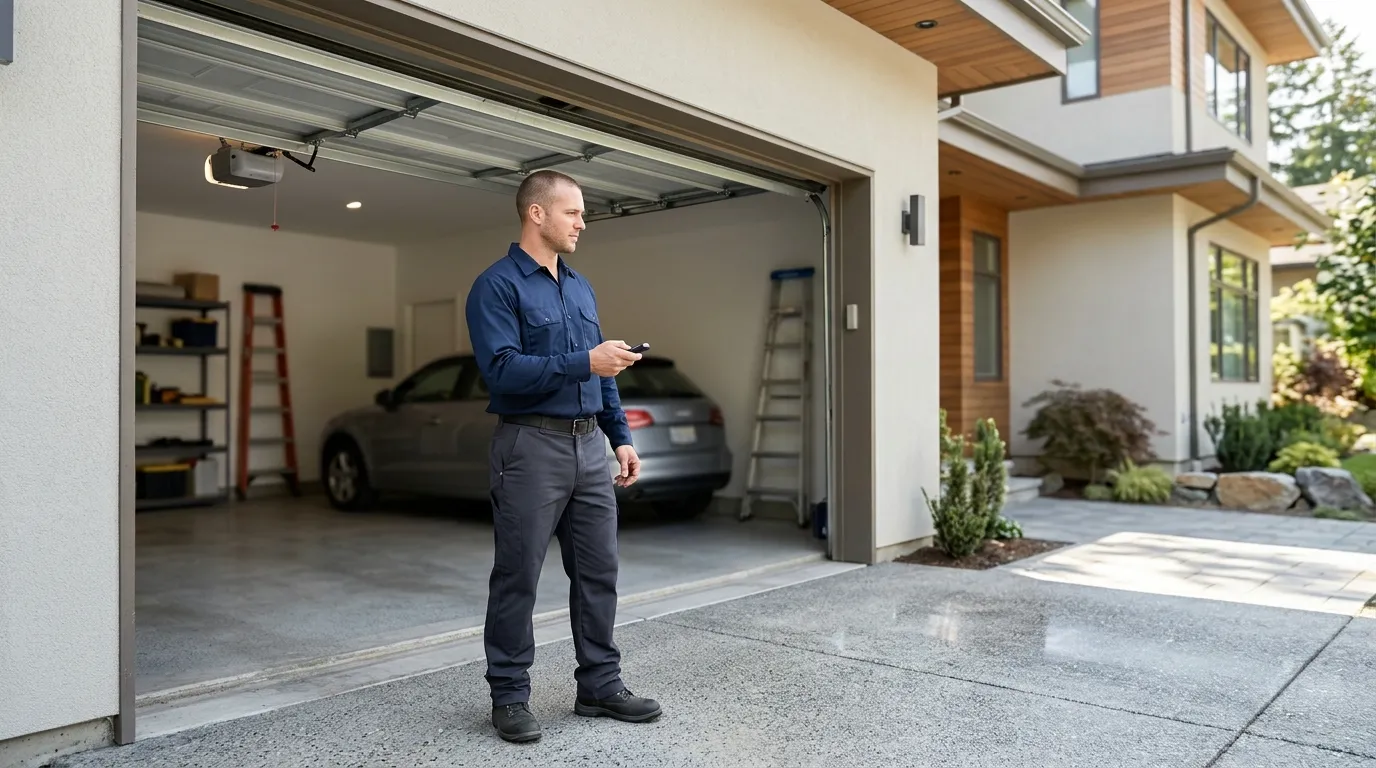
Red Oak's housing runs 1981 to 2014, with the median home going up around 1991, and the bulk of that stock across the area's nine named neighborhoods is 1980s and 90s construction. That matters because a torsion spring is rated for a set number of open-close cycles, not a set number of years, and a door installed in 1991 has been through three decades of daily use plus whatever the original builder-grade opener could handle. A lot of these houses still have their first or second opener, and gears made of nylon composite from that era wear down well before the motor itself fails.
Red Oak sits in a moderate-heat climate band rather than one of the harsher extreme-swing zones, so you're not dealing with the rapid expansion-and-contraction cracking that ages steel hardware fast in more severe climates - but heat still dries out lubricant on rollers and hinges faster than owners expect, and a dry roller is what turns a quiet door into a grinding one. Put an aging spring rated for a fixed cycle count together with three decades of daily use and dried-out hardware, and you get exactly the failure pattern showing up in these neighborhoods.
What It Costs
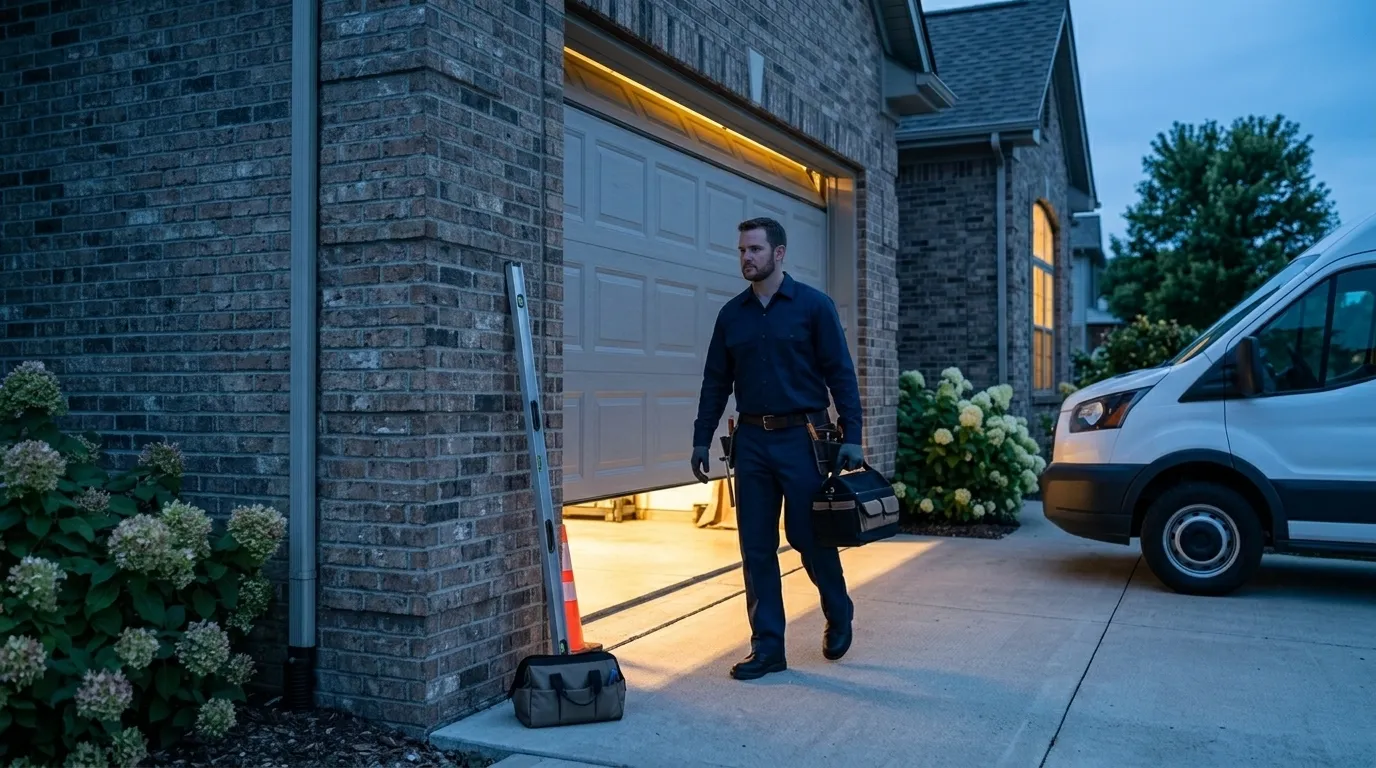
I can't give you a number here without seeing the door - spring size, opener model, and how far gone the hardware is all change the job, and quoting a flat figure without that information would be a guess dressed up as a fact. What I can tell you is what drives the cost up or down: a single spring swap on a door that's otherwise sound is a smaller job than a door where the cables, rollers, and opener gear are all failing at once, which happens more often once a door passes the 20-year mark.
If your opener is original to a house built in the 1980s or 90s, replacing it alongside a spring often makes more sense than fixing the old one piecemeal, since parts for that generation of opener are getting harder to source. The honest answer is that I'll look at the door, tell you what's actually wearing out, and price the real job - not a phone-quote number that changes once I'm standing in your garage.
Can You Do This Yourself
Cleaning the tracks, tightening loose hardware, and lubricating hinges and rollers are fine to do yourself, and doing that a couple of times a year is genuinely the best thing an owner can do for an older door. Replacing a torsion spring is not a DIY job. That spring is under enough tension to break a bone or worse if it lets go while you're working on it, and there's no safe shortcut around that - I'd rather turn down a job over the phone and tell someone to wait for a truck than talk them through it themselves.
Sensor alignment, remote programming, and swapping a worn weatherstrip are all reasonable for a handy homeowner. Anything involving the spring, the cable drums, or taking the door off its track should go to someone who does it daily. If you're not sure which category your problem falls into, that uncertainty is itself a reason to call rather than guess.
Talk to a Technician Before You Book
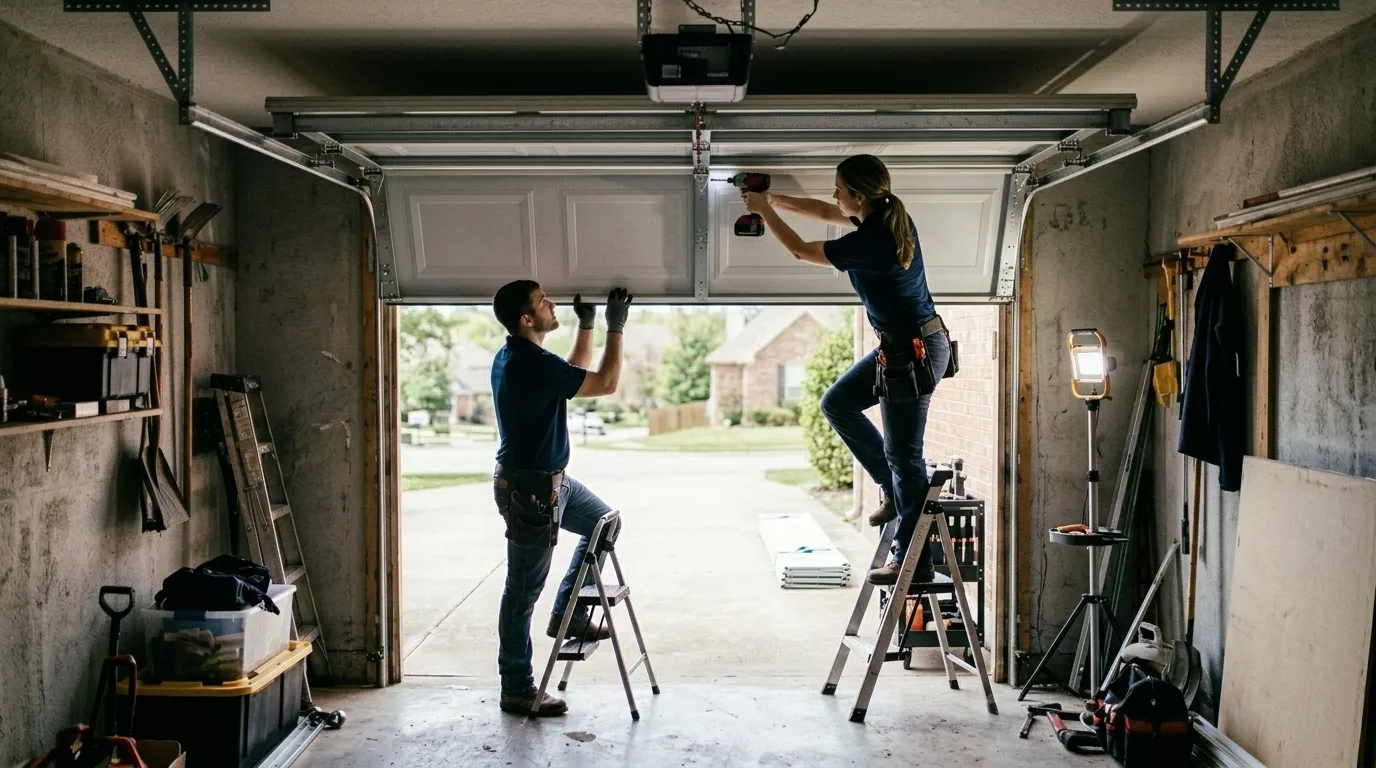
Describe what the door is doing and get a straight answer on what it likely needs.
Other Ways We Can Help
Jobs Like Yours
Recent work from this service line.
Why Red Oak Calls Us
Frequently Asked Questions
Why did my garage door spring snap out of nowhere?
It rarely happens out of nowhere - a torsion spring wears down over thousands of open-close cycles, and a lot of Red Oak's doors are original to houses built in the 1980s and 90s. Three decades of daily use is enough to reach the end of a spring's rated life, so the snap is the end of a long wear process, not a sudden defect.
Is Red Oak's heat hard on garage doors?
Red Oak sits in a moderate-heat climate band, so it's not the extreme temperature swings that crack hardware fast in harsher zones. The more common issue is heat drying out lubricant on rollers and hinges over time, which shows up as grinding or sticking before anything actually breaks.
Do you serve areas outside Red Oak itself, like Ovilla or Ferris?
Yes - the service area covers Red Oak and the surrounding towns including Oak Leaf, Ovilla, Ferris, Wilmer, and Palmer, all within about 9 miles. The same builder-era doors and openers from the 1980s and 90s show up across that whole stretch.
My opener runs but the door won't move - is that the spring?
Not usually. A spring failure typically stops the door from moving at all, often with a loud bang beforehand. An opener that runs without moving the door usually points to a stripped gear inside the unit or a chain off its sprocket - common in original openers from 1980s and 90s builds that are due for replacement parts.
Need Garage Door Service in Red Oak, TX?
Call now for straight answers on cost and timing.